I reviewed the best graphic design software to find the top programs and apps for creative professionals and beginners who want to bring their creativity to life.
Advertisement
First, it's worth noting that both Adobe Photoshop and Adobe Illustrator are excellent apps, with Photoshop being a great all-rounder for designers, artists, and Illustrator proving adept for hand-drawn designs. When it comes to designing polished and professional imagery for the likes of posters, social media content, or product design, these are peerless apps.
I'd also strongly recommend checking out Affinity Designer 2, which is easily one of the best Photoshop alternatives for graphic designers and has no on-going subscriptions (just a one off charge). And both Gimp and the very easy-to-use Canva are great free options.
My team and I have tested each app in this round up, using the best laptops for graphic design and the best monitors for graphic design to assess the software at a professional design level. As part of this process, we explore interface and creative flow, design tools and features, and image quality of the final exports.
I reviewed the best graphic design software to find the top programs and apps for creative professionals and beginners who want to bring their creativity to life.
Advertisement
First, it's worth noting that both Adobe Photoshop and Adobe Illustrator are excellent apps, with Photoshop being a great all-rounder for designers, artists, and Illustrator proving adept for hand-drawn designs. When it comes to designing polished and professional imagery for the likes of posters, social media content, or product design, these are peerless apps.
I'd also strongly recommend checking out Affinity Designer 2, which is easily one of the best Photoshop alternatives for graphic designers and has no on-going subscriptions (just a one off charge). And both Gimp and the very easy-to-use Canva are great free options.
My team and I have tested each app in this round up, using the best laptops for graphic design and the best monitors for graphic design to assess the software at a professional design level. As part of this process, we explore interface and creative flow, design tools and features, and image quality of the final exports.
Advertisement
Reader offer: 40% off for the first 6 months on Adobe Photoshop Adobe Photoshop is an image editing software, that enables users to enhance digital images with precision and creativity. Its extensive toolset is an asset to professionals to retouch photos, create stunning graphics, and design intricate compositions. Try it for yourself.
Photoshop is a byword for graphic design these days. Adobe’s photo and design software dominates the industry - and with good reason. Setting the gold standard for design work and photo editing, its toolkit is bursting with features, and it's even available on iPhones now.
When we reviewed the top tool, we found it offered best-in-class color management, layer handling, and selection tools, with AI automating a raft of effects from cleaning up images to object removal. After reviewing the software, we ultimately felt that from subject selection to object removal, Adobe’s AI tools offer impressive performance that effectively streamlines the more mundane or manual design tasks.
While Photoshop isn’t too tricky to learn, there is a slight learning curve that may overwhelm new users. Stick with it though, and you’ll be more than rewarded with high-quality, high-res results. It also means you’ll be familiar with other Adobe apps in the creative toolstack, since they largely follow the same interface.
Adobe Photoshop is an ongoing subscription-only service. Getting it on its own will cost you around $20 a month, but if you intend to incorporate four or more Adobe apps into your workflow, the Creative Cloud Pro plan would represent better value, only setting you back $70 a month on a yearly contract.
Serif Affinity Designer 2 is primarily a vector-based graphic design software for Mac, Windows, and iPad, although it does also possess a powerful array of raster-type tools.
Previous updates focused on the vector side of Designer, introducing powerful and highly requested features, such as a Shape Builder, various Warp tools, and many others. There's plenty going on here, with tools like variable fonts, the ability to alter the stroke’s width and position by dragging points along it, and you can even create QR codes, which will be useful for poster designers.
Overall, we were pleasantly surprised at how easy and intuitive such powerful features were to use, adding flexibility and versatility to an already impressive app.
We would argue that Designer has enough tools in its arsenal to be considered a potential Adobe Illustrator alternative, especially considering its highly impressive cost: a one-off $70 for the computer version, and $18.50 for iPad.
Canva is an ideal solution for designers and non-designers creating branded assets - an impressively easy-to-use graphic design app that largely relies on dragging, dropping, and resizing vector graphics. It's still one I use regularly for those quick designs and edits that don't require the full power of Photoshop or Affinity.
The beauty of Canva is in its simple execution. Whether you’re a skilled artist or you’ve never opened Photoshop in your life, you have the tools to create incredibly professional-looking graphics to boost your online presence, promote your brand, and more. There are plenty of templates for fast creation that can be fully customized to fit your branding. Little wonder it’s become a firm favorite in marketing departments where the demand to create a lot of high-end visual content fast is a necessity.
This is as much a content marketing tool as it is a design app, and under the hood you’ll find a simple video maker, website builder, logo maker, PDF maker, and more. Each is a delight to use - so long as you temper expectations: this is graphic design streamlined and online, so it lacks advanced tools for precise or very complex designs.
Use the left-hand sidebar to find the assets you want - from illustrations to stock photos and videos, or upload your own media. Brand-conscious organisations may want to opt for the Canva Pro subscription, which unlocks the Brand Kit, starting at $120 per year, ensuring design consistency across all creations.
Adobe Illustrator is a vector graphics editor and design program that's stable in use and absolutely packed with features for graphic design work at all levels.
We were impressed with the range of improvements Adobe has made here; it's pretty simple to identify and edit fonts in any image, create realistic mockups on template 3D objects, and work with projects online. The excellent Firefly AI tools are also, as with Photoshop, a nice way to quickly create images and objects with effective results. During our own tests, we found the AI was well-integrated into Illustrator. While your mileage may vary, we found the results to be pretty impressive.
Like most Adobe apps, Illustrator is available via a standalone subscription ($23 a month), and also comes bundled into the Creative Cloud Pro plan ($70 a month), which is a useful option if you're also using many other Adobe software, such as Photoshop, Lightroom, InDesign, etc.
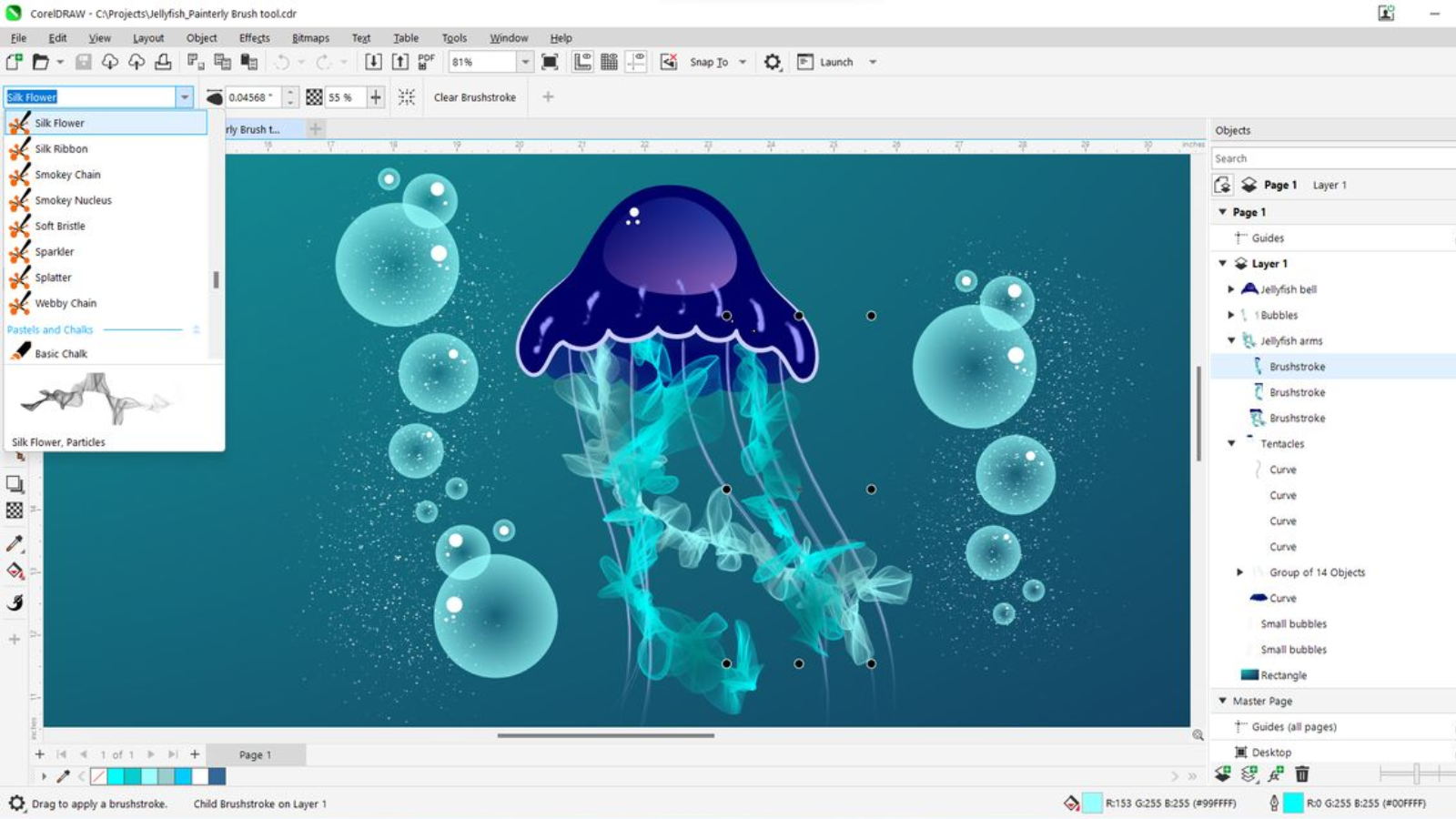
CorelDRAW can be purchased either on its own, or as part of the CorelDRAW Graphics Suite bundle. That package also includes PHOTO-PAINT for image manipulation, PowerTRACE to convert bitmap images into vectors, CorelDRAW Web, an online version of the main attraction, and Font Manager for organising the font families you actually use.
The main star, of course, is CorelDRAW itself, which isn't just a vector-drawing package but also includes a desktop publishing feature as well, enabling you to create multi-page projects.
The newest version includes an update to the Painterly Brush tool, and a new Pantone colour palette. Elsewhere, you'll find pixel-based brushes and creative templates, streamlined fonts and non-destructive effects workflows. In addition to these, is the ability to easily search through your images as thumbnails.
Overall, CorelDRAW, whether on its own or as part of the suite, offers a big range of tools that remain very up-to-date. You’ll find the suite is the same price as the individual app, so getting the former is a no brainer. Even better, Corel offers you the choice of either owning the package for $549, or subscribing for $22/42 per month.
The company has also released CorelDRAW Go, an online graphic design tool that in my experience works a lot like Canva or Adobe Express.
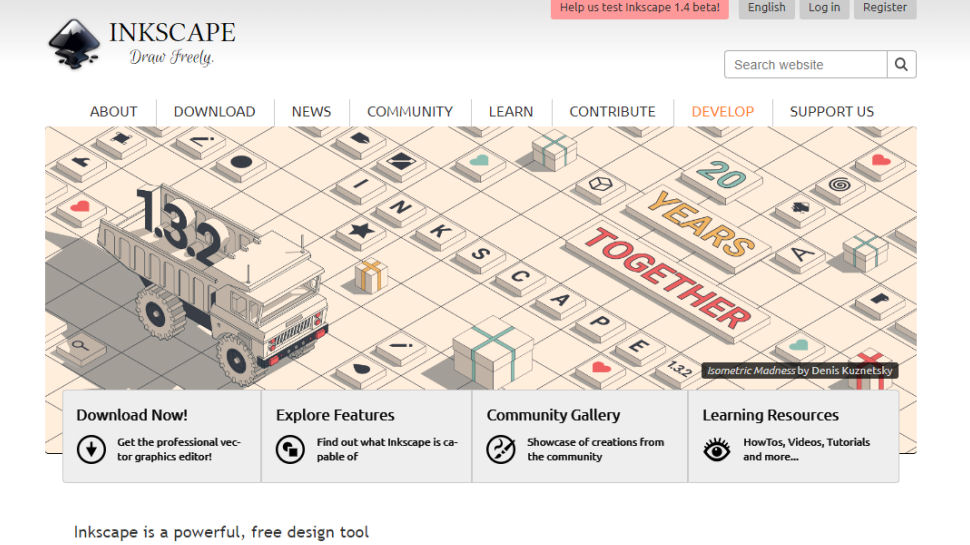
Most business people often shy away from free software for valid reasons, but Inkscape is certainly worth looking at before you commit to buying CorelDRAW or one of a myriad of Adobe subscriptions.
Inkscape is a vector design tool that offers broad file support, extensive text manipulation, and both Bezier and Spiro curve types. It also has an extension model that allows new features to be easily installed, and there are some amazing ones available.
The only reservations we have are that even on a powerful PC, this software can be slow at times when a complicated process involves rendering.
As a GPL-licensed app, along with Windows, Linux, and Apple Mac versions, you can also download the source code and compile it for whatever version of Linux you are using.
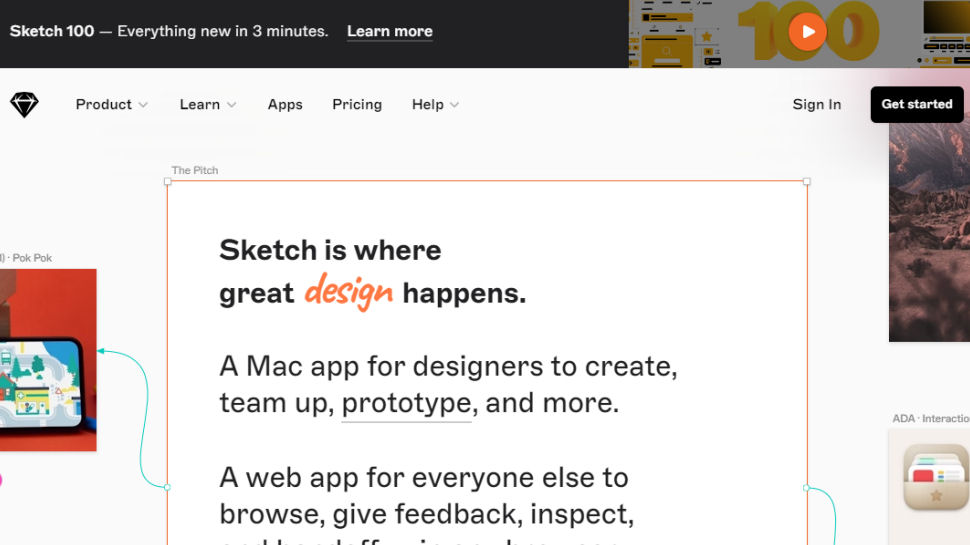
Rather than the scatter-gun approach of other applications, the creators of Sketch built a tool to address a relatively narrow requirement.
Sketch is focused on screen design, specifically creating the icons and interface elements for websites and applications. And, as the software is exclusively available for the Apple Mac, most designers working on iPhone, iPad and macOS applications are going to find it useful.
That said, it can be used more generally, but its strength is creating slick user interfaces. Sketch is one of the best UI tools in the market and it offers a brilliant, minimalist user experience with its intuitive keyboard shortcuts and smooth running. It also boasts a vast library of Sketch Plugins and is quite feature-rich.
Sketch is available as a solo designer license for $120, or as a standard subscription for $10 per editor a month, billed yearly (or $12 billed monthly).
The company behind Xara started out on the Atari ST and Acorn Archimedes computers in the 1980s, before focusing its efforts on the PC when Windows came along.
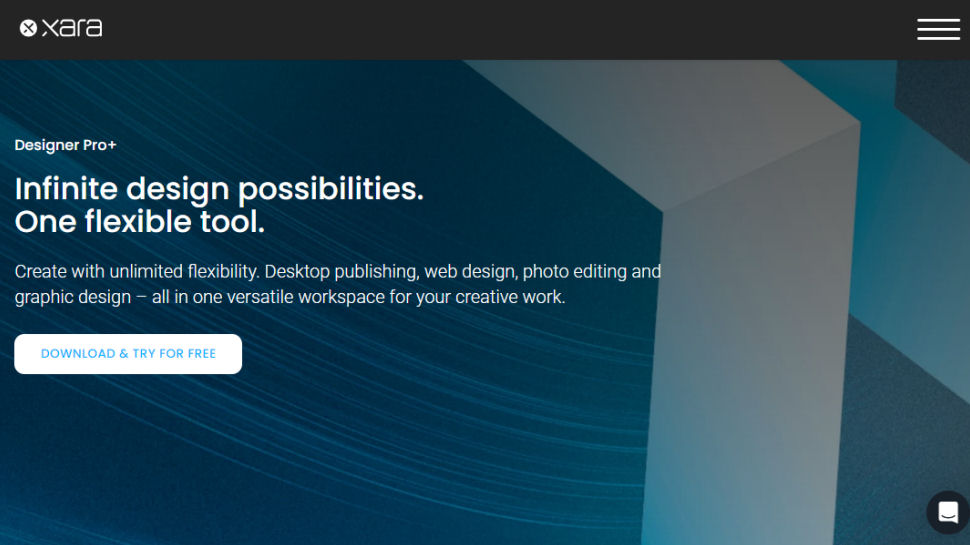
The latest version of Xara Designer Pro X is a comprehensive design tool that can work with both bitmaps and vectors with equal aplomb. That means it can handle DTP (desktop publishing), graphic design, illustration and photo manipulation tasks in a single tool.
For those wanting to mock up something rapidly, a subscription gives you access to over a million archive photos and illustrations to incorporate, along with hundreds of template layouts and thousands of design elements, for $16 a month (billed annually).
Best graphic design software: Frequently asked questions
What is graphic design software?
Graphic design is the creation and arrangement of visuals in a project to convey ideas or messages. Graphic design tools or software enable users to work on various aspects of design — from vector graphics and photo manipulation to color editing, color correction, and much more.
What is vector Illustration?
We put the question to Klaus Vossen, Senior Product Manager for CorelDraw . So what exactly is a vector and vector illustration and how does it differ from a bitmap.
Let’s start with Vector vs. Bitmap. Bitmaps, also known as raster images, are created using pixels, which are small dots of color. Think photographs! And while bitmap images are essential to any design workflow, it’s important to know that they can vary tremendously in terms of size and image quality – unfortunately running the risk of becoming blurry when enlarged.
On the other hand, vector images are made up of points, lines, and shapes that can be edited to precise detail, and because they’re based on mathematical equations they can be scaled indefinitely to any size. Extremely versatile, a single vector image, let’s say a logo, can be printed anywhere from the corner of an envelope to a roadside billboard – all using the same original file.
So now that we know what a vector file is, it’s easy to understand why they’re so important to a graphics workflow. And while there are plenty of apps that offer vector illustration tools, if you want professional results with high-quality output, you need professional software.
What's the difference between vector and raster?
Vector and raster graphics are both essential for digital designers, artists, and creatives - but what are the differences between the two? Vector graphics are 'resolution independent'. This means the graphics, built from lines, points, and curves, use mathematical equations to let you resize vector graphics without seeing a drop in quality. Raster graphics are made from pixels, which means they can look good at their intended size, but scaling up the image and maintaining quality isn't possible. There are pros and cons to using both.
When deciding which of the best graphic design software to download and use, first consider how serious and professional you need the software to be.
If you are only looking to make simple designs and files then you have the option to be less fussy about which program you use.
However, if you plan to develop anything for professional printing, it may be better to aim for one of the higher range and more expensive programs on our list.
You'll also want to consider the capabilities of your computer. Most vector editors and design apps aren't especially resource-intensive, but you will want one with a color-accurate screen and good graphics to ensure your on-screen artwork precisely matches the final version. Alternatively, if you prefer to work on the go, the best drawing tablets and the best laptops for drawing and digital art may better suit your creative workflow.
To test for the best graphic design software, we first set up an account with a range of different software platforms, either as a download or as an online service. We then tested it using a handful of images to see how the software could be used for the editing and development of each image.
The aim was to push each software platform to see whether it could simply and easily not just edit a range of content types but also do so faithfully and consistently without introducing formatting issues or similar problems that would make them useless for printing purposes.
Steve is B2B Editor for Creative & Hardware at TechRadar Pro. He began in tech journalism reviewing photo editors and video editing software at Web User magazine, and covered technology news, features, and how-to guides. Today, he and his team of expert reviewers test out a range of creative software, hardware, and office furniture. Once upon a time, he wrote TV commercials and movie trailers. Relentless champion of the Oxford comma.
Reader offer: 40% off for the first 6 months on Adobe Photoshop Adobe Photoshop is an image editing software, that enables users to enhance digital images with precision and creativity. Its extensive toolset is an asset to professionals to retouch photos, create stunning graphics, and design intricate compositions. Try it for yourself.
Photoshop is a byword for graphic design these days. Adobe’s photo and design software dominates the industry - and with good reason. Setting the gold standard for design work and photo editing, its toolkit is bursting with features, and it's even available on iPhones now.
When we reviewed the top tool, we found it offered best-in-class color management, layer handling, and selection tools, with AI automating a raft of effects from cleaning up images to object removal. After reviewing the software, we ultimately felt that from subject selection to object removal, Adobe’s AI tools offer impressive performance that effectively streamlines the more mundane or manual design tasks.
While Photoshop isn’t too tricky to learn, there is a slight learning curve that may overwhelm new users. Stick with it though, and you’ll be more than rewarded with high-quality, high-res results. It also means you’ll be familiar with other Adobe apps in the creative toolstack, since they largely follow the same interface.
Adobe Photoshop is an ongoing subscription-only service. Getting it on its own will cost you around $20 a month, but if you intend to incorporate four or more Adobe apps into your workflow, the Creative Cloud Pro plan would represent better value, only setting you back $70 a month on a yearly contract.
Serif Affinity Designer 2 is primarily a vector-based graphic design software for Mac, Windows, and iPad, although it does also possess a powerful array of raster-type tools.
Previous updates focused on the vector side of Designer, introducing powerful and highly requested features, such as a Shape Builder, various Warp tools, and many others. There's plenty going on here, with tools like variable fonts, the ability to alter the stroke’s width and position by dragging points along it, and you can even create QR codes, which will be useful for poster designers.
Overall, we were pleasantly surprised at how easy and intuitive such powerful features were to use, adding flexibility and versatility to an already impressive app.
We would argue that Designer has enough tools in its arsenal to be considered a potential Adobe Illustrator alternative, especially considering its highly impressive cost: a one-off $70 for the computer version, and $18.50 for iPad.
Canva is an ideal solution for designers and non-designers creating branded assets - an impressively easy-to-use graphic design app that largely relies on dragging, dropping, and resizing vector graphics. It's still one I use regularly for those quick designs and edits that don't require the full power of Photoshop or Affinity.
The beauty of Canva is in its simple execution. Whether you’re a skilled artist or you’ve never opened Photoshop in your life, you have the tools to create incredibly professional-looking graphics to boost your online presence, promote your brand, and more. There are plenty of templates for fast creation that can be fully customized to fit your branding. Little wonder it’s become a firm favorite in marketing departments where the demand to create a lot of high-end visual content fast is a necessity.
This is as much a content marketing tool as it is a design app, and under the hood you’ll find a simple video maker, website builder, logo maker, PDF maker, and more. Each is a delight to use - so long as you temper expectations: this is graphic design streamlined and online, so it lacks advanced tools for precise or very complex designs.
Use the left-hand sidebar to find the assets you want - from illustrations to stock photos and videos, or upload your own media. Brand-conscious organisations may want to opt for the Canva Pro subscription, which unlocks the Brand Kit, starting at $120 per year, ensuring design consistency across all creations.
Adobe Illustrator is a vector graphics editor and design program that's stable in use and absolutely packed with features for graphic design work at all levels.
We were impressed with the range of improvements Adobe has made here; it's pretty simple to identify and edit fonts in any image, create realistic mockups on template 3D objects, and work with projects online. The excellent Firefly AI tools are also, as with Photoshop, a nice way to quickly create images and objects with effective results. During our own tests, we found the AI was well-integrated into Illustrator. While your mileage may vary, we found the results to be pretty impressive.
Like most Adobe apps, Illustrator is available via a standalone subscription ($23 a month), and also comes bundled into the Creative Cloud Pro plan ($70 a month), which is a useful option if you're also using many other Adobe software, such as Photoshop, Lightroom, InDesign, etc.
CorelDRAW can be purchased either on its own, or as part of the CorelDRAW Graphics Suite bundle. That package also includes PHOTO-PAINT for image manipulation, PowerTRACE to convert bitmap images into vectors, CorelDRAW Web, an online version of the main attraction, and Font Manager for organising the font families you actually use.
The main star, of course, is CorelDRAW itself, which isn't just a vector-drawing package but also includes a desktop publishing feature as well, enabling you to create multi-page projects.
The newest version includes an update to the Painterly Brush tool, and a new Pantone colour palette. Elsewhere, you'll find pixel-based brushes and creative templates, streamlined fonts and non-destructive effects workflows. In addition to these, is the ability to easily search through your images as thumbnails.
Overall, CorelDRAW, whether on its own or as part of the suite, offers a big range of tools that remain very up-to-date. You’ll find the suite is the same price as the individual app, so getting the former is a no brainer. Even better, Corel offers you the choice of either owning the package for $549, or subscribing for $22/42 per month.
The company has also released CorelDRAW Go, an online graphic design tool that in my experience works a lot like Canva or Adobe Express.
Most business people often shy away from free software for valid reasons, but Inkscape is certainly worth looking at before you commit to buying CorelDRAW or one of a myriad of Adobe subscriptions.
Inkscape is a vector design tool that offers broad file support, extensive text manipulation, and both Bezier and Spiro curve types. It also has an extension model that allows new features to be easily installed, and there are some amazing ones available.
The only reservations we have are that even on a powerful PC, this software can be slow at times when a complicated process involves rendering.
As a GPL-licensed app, along with Windows, Linux, and Apple Mac versions, you can also download the source code and compile it for whatever version of Linux you are using.
Rather than the scatter-gun approach of other applications, the creators of Sketch built a tool to address a relatively narrow requirement.
Sketch is focused on screen design, specifically creating the icons and interface elements for websites and applications. And, as the software is exclusively available for the Apple Mac, most designers working on iPhone, iPad and macOS applications are going to find it useful.
That said, it can be used more generally, but its strength is creating slick user interfaces. Sketch is one of the best UI tools in the market and it offers a brilliant, minimalist user experience with its intuitive keyboard shortcuts and smooth running. It also boasts a vast library of Sketch Plugins and is quite feature-rich.
Sketch is available as a solo designer license for $120, or as a standard subscription for $10 per editor a month, billed yearly (or $12 billed monthly).
The company behind Xara started out on the Atari ST and Acorn Archimedes computers in the 1980s, before focusing its efforts on the PC when Windows came along.
The latest version of Xara Designer Pro X is a comprehensive design tool that can work with both bitmaps and vectors with equal aplomb. That means it can handle DTP (desktop publishing), graphic design, illustration and photo manipulation tasks in a single tool.
For those wanting to mock up something rapidly, a subscription gives you access to over a million archive photos and illustrations to incorporate, along with hundreds of template layouts and thousands of design elements, for $16 a month (billed annually).
Best graphic design software: Frequently asked questions
What is graphic design software?
Graphic design is the creation and arrangement of visuals in a project to convey ideas or messages. Graphic design tools or software enable users to work on various aspects of design — from vector graphics and photo manipulation to color editing, color correction, and much more.
What is vector Illustration?
We put the question to Klaus Vossen, Senior Product Manager for CorelDraw . So what exactly is a vector and vector illustration and how does it differ from a bitmap.
Let’s start with Vector vs. Bitmap. Bitmaps, also known as raster images, are created using pixels, which are small dots of color. Think photographs! And while bitmap images are essential to any design workflow, it’s important to know that they can vary tremendously in terms of size and image quality – unfortunately running the risk of becoming blurry when enlarged.
On the other hand, vector images are made up of points, lines, and shapes that can be edited to precise detail, and because they’re based on mathematical equations they can be scaled indefinitely to any size. Extremely versatile, a single vector image, let’s say a logo, can be printed anywhere from the corner of an envelope to a roadside billboard – all using the same original file.
So now that we know what a vector file is, it’s easy to understand why they’re so important to a graphics workflow. And while there are plenty of apps that offer vector illustration tools, if you want professional results with high-quality output, you need professional software.
What's the difference between vector and raster?
Vector and raster graphics are both essential for digital designers, artists, and creatives - but what are the differences between the two? Vector graphics are 'resolution independent'. This means the graphics, built from lines, points, and curves, use mathematical equations to let you resize vector graphics without seeing a drop in quality. Raster graphics are made from pixels, which means they can look good at their intended size, but scaling up the image and maintaining quality isn't possible. There are pros and cons to using both.
When deciding which of the best graphic design software to download and use, first consider how serious and professional you need the software to be.
If you are only looking to make simple designs and files then you have the option to be less fussy about which program you use.
However, if you plan to develop anything for professional printing, it may be better to aim for one of the higher range and more expensive programs on our list.
You'll also want to consider the capabilities of your computer. Most vector editors and design apps aren't especially resource-intensive, but you will want one with a color-accurate screen and good graphics to ensure your on-screen artwork precisely matches the final version. Alternatively, if you prefer to work on the go, the best drawing tablets and the best laptops for drawing and digital art may better suit your creative workflow.
To test for the best graphic design software, we first set up an account with a range of different software platforms, either as a download or as an online service. We then tested it using a handful of images to see how the software could be used for the editing and development of each image.
The aim was to push each software platform to see whether it could simply and easily not just edit a range of content types but also do so faithfully and consistently without introducing formatting issues or similar problems that would make them useless for printing purposes.
Steve is B2B Editor for Creative & Hardware at TechRadar Pro. He began in tech journalism reviewing photo editors and video editing software at Web User magazine, and covered technology news, features, and how-to guides. Today, he and his team of expert reviewers test out a range of creative software, hardware, and office furniture. Once upon a time, he wrote TV commercials and movie trailers. Relentless champion of the Oxford comma.
top ten editing apps for video editing, covering both free and paid options: Best Video Editing Apps - *Top Picks for Professionals* - *Adobe Premiere Pro*: Industry-standard video editing software with advanced tools and features ($20.99/month) - * DaVinci Resolve 18 *: Powerful video editor with color grading, VFX, and audio post-production capabilities (Free/Studio version at $295 one-time payment) - *Final Cut Pro X*: Apple's flagship video editor with optimized performance for M3/M4 Macs ($299 one-time purchase) Best for Mobile Editing - *LumaFusion*: High-end mobile video editing with multi-track editing, keyframe animations, and external monitor support ($29.99 one-time purchase) - *KineMaster*: Feature-rich video editing app with chroma key, asset store, and frame-by-frame editing (Free/Premium at $4.9/month) - *InShot *: User-friendly video editor with easy trimming, speed control, and music library ($3.99/month) Best Free Optio...
Advice you would give your 25 year old self Full article write Here’s a detailed full article on “Advice I Would Give to My 25-Year-Old Self” : Advice I Would Give to My 25-Year-Old Self Turning 25 is a unique milestone. You are no longer a fresh graduate, yet not fully settled in life. It’s an age filled with ambition, uncertainty, and endless questions about the future. Looking back now, there are so many things I wish I had known at 25—lessons that could have saved me time, stress, and even heartbreak. If I could sit down with my younger self, here’s the advice I would give. 1. Stop Comparing Yourself to Others At 25, it’s easy to look around and feel behind. Your friends might be getting married, buying homes, or climbing the career ladder. But comparison is a trap that steals joy and confidence. Everyone is on a different timeline. Success at 30 looks different than success at 40. Focus on your journey and celebrate small wins. 2. Build Financial Discipline Early I...
Comments
Post a Comment